
Fundraising and communications volunteer volunteer volunteer roles


Actively Interviewing
This organisation is scheduling interviews as applications come in. They're ready to hire as soon as they find the right person. Don't miss your opportunity, apply now!
Would you like to support people who have served in the Armed Forces? You just need the ability to listen, strong IT skills and good written and spoken English. If you think this could be the role for you, we’d love to hear from you.
What is a Caseworker?
Caseworkers visit clients to work out what type of support they need. You will listen without judgement to assess and provide tailored support to help those serving, who have served and their families to navigate life in and beyond military service. Some examples of support are securing funding for special equipment for someone with a disability, adaptions to a property so an older client can remain at home or funds for a rental deposit. Caseworkers also sign-post clients onto specialist local services for advice on benefits, housing, mental health, debt, finding work etc.
Why do we need you?
We’ve been supporting the Armed Forces community since 1885. Our clients come from all backgrounds and age groups and may have served in WW2 or in a more recent conflict like the Falklands or Afghanistan. We’d love the general public to understand what we do and how they can help us.
There are SSAFA branches throughout the UK and overseas who support local volunteers to deliver services to veterans, serving personnel and their families. Some branches are divided into smaller divisions to ensure the best local service delivery. Each branch has a team of volunteer caseworkers, support volunteers, executive roles, and fundraisers.
Volunteer Caseworkers are the lifeblood of SSAFA, supporting a growing number of people in need of financial, practical, and emotional support. Clients come from all backgrounds and age groups and may have served in WW2 or in a more recent conflict like Iraq or Afghanistan.
When would you be needed and where would you be based?
The essential part of the role is visiting clients, so you will need access to a vehicle or another way to travel to meet clients at home or in a care home setting. As part of your local branch, you might have access to an office, but you can complete the administration part of the role from home as long as you have access to IT equipment and the internet.
What would you be doing?
- Contacting beneficiaries and arranging to meet them at a mutually convenient time.
- Meeting beneficiaries and completing a form to assess their circumstances, using good communication skills, empathy and understanding.
- Sign-posting clients onto local services providing specialist advice.
- Applying for funding on the behalf of the beneficiary through a specific process and system
- Arranging for the purchase of goods and services
- Keeping the beneficiary informed of their case progress.
- Liaise with the branch and regional office, regarding your availability.
- Keeping up to date with training and SSAFA news so that you are best able to support clients.
- Being a positive ambassador for SSAFA remembering that anyone you meet could be a potential client, volunteer, or fundraiser.
- Volunteering within the standards and values of SSAFA
- Adhering to SSAFAs policies and procedures at all times, including safeguarding, volunteering policy, equality, diversity and inclusion, health and safety, data protection and confidentiality.
What can you gain from this volunteering role?
- Use your skills, knowledge, and life experience to benefit others.
- Support from your local SSAFA branch and the wider SSAFA community
- Experience, training, and skills that you can highlight on your CV and in job interviews.
- Better physical and mental health – studies show that volunteers live longer and experience lower levels of stress and depression!
What training and support would you receive?
- Role specific training to prepare you for your voluntary role – confidentiality and boundaries, personal safety, caseworker training, and caseworker IT system training. The caseworker training takes 3 days and a further half a day for the other training.
- Mandatory on-line training modules to complete at home, so you are up to date on how to keep clients, their families safe and personal information safe.
- Access to a range additional e-learning courses as well as local opportunities for your personal and professional development.
- Local induction including assigning a person from the team who will be your main point of contact.
- Regular opportunities to meet and share best practice with other caseworkers.
- Range of support from central and regional volunteer operations team.
- Reimbursement of out-of-pocket expenses
- Volunteers will be covered by SSAFAs Public Liability Insurance whilst carrying out the role.
What are we looking for?
- Friendly and approachable with good listening skills, patience, and a positive attitude.
- Good communication skills both written and verbally.
- Respectful and non-judgemental approach with beneficiaries, their family, other agencies and SSAFA colleagues
- Willingness and ability to use IT systems for initial and on-going training and to enter cases on the Casework Management System. Willingness and ability to send and receive emails – you will receive your own SSAFA email address which you will be required to use when exercising your role.
- Ability to make enquires on behalf of beneficiaries by phone, email, letter or by filling in forms.
- Ability to keep within boundaries of the role with regards to friendship or giving advice
- Reliable, prompt and trustworthy.
- Access to public transport or a car to travel to appointments with clients.
We welcome volunteers of all backgrounds, abilities, races, sexual orientations, socio-economic backgrounds, and of all faiths and none. SSAFA are committed to making reasonable adjustments to support volunteers with disabilities, so they have access to the same opportunities and experiences as volunteers who do not.
Minimum Age: 18
Safer Recruitment: SSAFA undertakes a systematic approach and utmost care at every step of the process of volunteer recruitment, selection, and retention to ensure that those recruited are suitable and appropriate. Measures taken at points along this journey work together to make volunteering at SSAFA a positive and safe experience.
References Required: Yes. We will ask for two character references, this can be a former employer or someone that know you well (other than a relative)
Is a criminal record check required? Yes, this is provided by SSAFA at no cost to the potential volunteer. This role requires an enhanced check (including checks against the children and adults barred list)
*A disclosure certificate that contains convictions, cautions, warnings, reprimands, or other information may not automatically mean that you are not able to volunteer. All certificates will be reviewed on a case-by-case basis and, where possible, a modified or alternative role will be offered.

 Registered Charity
 101 - 500
Our vision A society in which the Armed Forces, veterans and their families can thrive.


The client requests no contact from agencies or media sales.

Thank you!
Actively Interviewing
This organisation is scheduling interviews as applications come in. They're ready to hire as soon as they find the right person. Don't miss your opportunity, apply now!
Would you like to support people who have served in the Armed Forces? You just need the ability to listen, strong IT skills and good written and spoken English. If you think this could be the role for you, we’d love to hear from you.
What is a Caseworker?
Caseworkers visit clients to work out what type of support they need. You will listen without judgement to assess and provide tailored support to help those serving, who have served and their families to navigate life in and beyond military service. Some examples of support are securing funding for special equipment for someone with a disability, adaptions to a property so an older client can remain at home or funds for a rental deposit. Caseworkers also sign-post clients onto specialist local services for advice on benefits, housing, mental health, debt, finding work etc.
Why do we need you?
We’ve been supporting the Armed Forces community since 1885. Our clients come from all backgrounds and age groups and may have served in WW2 or in a more recent conflict like the Falklands or Afghanistan. We’d love the general public to understand what we do and how they can help us.
There are SSAFA branches throughout the UK and overseas who support local volunteers to deliver services to veterans, serving personnel and their families. Some branches are divided into smaller divisions to ensure the best local service delivery. Each branch has a team of volunteer caseworkers, support volunteers, executive roles, and fundraisers.
Volunteer Caseworkers are the lifeblood of SSAFA, supporting a growing number of people in need of financial, practical, and emotional support. Clients come from all backgrounds and age groups and may have served in WW2 or in a more recent conflict like Iraq or Afghanistan.
When would you be needed and where would you be based?
The essential part of the role is visiting clients, so you will need access to a vehicle or another way to travel to meet clients at home or in a care home setting. As part of your local branch, you might have access to an office, but you can complete the administration part of the role from home as long as you have access to IT equipment and the internet.
What would you be doing?
- Contacting beneficiaries and arranging to meet them at a mutually convenient time.
- Meeting beneficiaries and completing a form to assess their circumstances, using good communication skills, empathy and understanding.
- Sign-posting clients onto local services providing specialist advice.
- Applying for funding on the behalf of the beneficiary through a specific process and system
- Arranging for the purchase of goods and services
- Keeping the beneficiary informed of their case progress.
- Liaise with the branch and regional office, regarding your availability.
- Keeping up to date with training and SSAFA news so that you are best able to support clients.
- Being a positive ambassador for SSAFA remembering that anyone you meet could be a potential client, volunteer, or fundraiser.
- Volunteering within the standards and values of SSAFA
- Adhering to SSAFAs policies and procedures at all times, including safeguarding, volunteering policy, equality, diversity and inclusion, health and safety, data protection and confidentiality.
What can you gain from this volunteering role?
- Use your skills, knowledge, and life experience to benefit others.
- Support from your local SSAFA branch and the wider SSAFA community
- Experience, training, and skills that you can highlight on your CV and in job interviews.
- Better physical and mental health – studies show that volunteers live longer and experience lower levels of stress and depression!
What training and support would you receive?
- Role specific training to prepare you for your voluntary role – confidentiality and boundaries, personal safety, caseworker training, and caseworker IT system training. The caseworker training takes 3 days and a further half a day for the other training.
- Mandatory on-line training modules to complete at home, so you are up to date on how to keep clients, their families safe and personal information safe.
- Access to a range additional e-learning courses as well as local opportunities for your personal and professional development.
- Local induction including assigning a person from the team who will be your main point of contact.
- Regular opportunities to meet and share best practice with other caseworkers.
- Range of support from central and regional volunteer operations team.
- Reimbursement of out-of-pocket expenses
- Volunteers will be covered by SSAFAs Public Liability Insurance whilst carrying out the role.
What are we looking for?
- Friendly and approachable with good listening skills, patience, and a positive attitude.
- Good communication skills both written and verbally.
- Respectful and non-judgemental approach with beneficiaries, their family, other agencies and SSAFA colleagues
- Willingness and ability to use IT systems for initial and on-going training and to enter cases on the Casework Management System. Willingness and ability to send and receive emails – you will receive your own SSAFA email address which you will be required to use when exercising your role.
- Ability to make enquires on behalf of beneficiaries by phone, email, letter or by filling in forms.
- Ability to keep within boundaries of the role with regards to friendship or giving advice
- Reliable, prompt and trustworthy.
- Access to public transport or a car to travel to appointments with clients.
We welcome volunteers of all backgrounds, abilities, races, sexual orientations, socio-economic backgrounds, and of all faiths and none. SSAFA are committed to making reasonable adjustments to support volunteers with disabilities, so they have access to the same opportunities and experiences as volunteers who do not.
Minimum Age: 18
Safer Recruitment: SSAFA undertakes a systematic approach and utmost care at every step of the process of volunteer recruitment, selection, and retention to ensure that those recruited are suitable and appropriate. Measures taken at points along this journey work together to make volunteering at SSAFA a positive and safe experience.
References Required: Yes. We will ask for two character references, this can be a former employer or someone that know you well (other than a relative)
Is a criminal record check required? Yes, this is provided by SSAFA at no cost to the potential volunteer. This role requires an enhanced check (including checks against the children and adults barred list)
*A disclosure certificate that contains convictions, cautions, warnings, reprimands, or other information may not automatically mean that you are not able to volunteer. All certificates will be reviewed on a case-by-case basis and, where possible, a modified or alternative role will be offered.
Registered Charity
101 - 500
Our vision A society in which the Armed Forces, veterans and their families can thrive.
The client requests no contact from agencies or media sales.
Thank you!
Actively Interviewing
This organisation is scheduling interviews as applications come in. They're ready to hire as soon as they find the right person. Don't miss your opportunity, apply now!
Would you like to support people who have served in the Armed Forces? You just need the ability to listen, strong IT skills and good written and spoken English. If you think this could be the role for you, we’d love to hear from you.
What is a Caseworker?
Caseworkers visit clients to work out what type of support they need. You will listen without judgement to assess and provide tailored support to help those serving, who have served and their families to navigate life in and beyond military service. Some examples of support are securing funding for special equipment for someone with a disability, adaptions to a property so an older client can remain at home or funds for a rental deposit. Caseworkers also sign-post clients onto specialist local services for advice on benefits, housing, mental health, debt, finding work etc.
Why do we need you?
We’ve been supporting the Armed Forces community since 1885. Our clients come from all backgrounds and age groups and may have served in WW2 or in a more recent conflict like the Falklands or Afghanistan. We’d love the general public to understand what we do and how they can help us.
There are SSAFA branches throughout the UK and overseas who support local volunteers to deliver services to veterans, serving personnel and their families. Some branches are divided into smaller divisions to ensure the best local service delivery. Each branch has a team of volunteer caseworkers, support volunteers, executive roles, and fundraisers.
Volunteer Caseworkers are the lifeblood of SSAFA, supporting a growing number of people in need of financial, practical, and emotional support. Clients come from all backgrounds and age groups and may have served in WW2 or in a more recent conflict like Iraq or Afghanistan.
When would you be needed and where would you be based?
The essential part of the role is visiting clients, so you will need access to a vehicle or another way to travel to meet clients at home or in a care home setting. As part of your local branch, you might have access to an office, but you can complete the administration part of the role from home as long as you have access to IT equipment and the internet.
What would you be doing?
- Contacting beneficiaries and arranging to meet them at a mutually convenient time.
- Meeting beneficiaries and completing a form to assess their circumstances, using good communication skills, empathy and understanding.
- Sign-posting clients onto local services providing specialist advice.
- Applying for funding on the behalf of the beneficiary through a specific process and system
- Arranging for the purchase of goods and services
- Keeping the beneficiary informed of their case progress.
- Liaise with the branch and regional office, regarding your availability.
- Keeping up to date with training and SSAFA news so that you are best able to support clients.
- Being a positive ambassador for SSAFA remembering that anyone you meet could be a potential client, volunteer, or fundraiser.
- Volunteering within the standards and values of SSAFA
- Adhering to SSAFAs policies and procedures at all times, including safeguarding, volunteering policy, equality, diversity and inclusion, health and safety, data protection and confidentiality.
What can you gain from this volunteering role?
- Use your skills, knowledge, and life experience to benefit others.
- Support from your local SSAFA branch and the wider SSAFA community
- Experience, training, and skills that you can highlight on your CV and in job interviews.
- Better physical and mental health – studies show that volunteers live longer and experience lower levels of stress and depression!
What training and support would you receive?
- Role specific training to prepare you for your voluntary role – confidentiality and boundaries, personal safety, caseworker training, and caseworker IT system training. The caseworker training takes 3 days and a further half a day for the other training.
- Mandatory on-line training modules to complete at home, so you are up to date on how to keep clients, their families safe and personal information safe.
- Access to a range additional e-learning courses as well as local opportunities for your personal and professional development.
- Local induction including assigning a person from the team who will be your main point of contact.
- Regular opportunities to meet and share best practice with other caseworkers.
- Range of support from central and regional volunteer operations team.
- Reimbursement of out-of-pocket expenses
- Volunteers will be covered by SSAFAs Public Liability Insurance whilst carrying out the role.
What are we looking for?
- Friendly and approachable with good listening skills, patience, and a positive attitude.
- Good communication skills both written and verbally.
- Respectful and non-judgemental approach with beneficiaries, their family, other agencies and SSAFA colleagues
- Willingness and ability to use IT systems for initial and on-going training and to enter cases on the Casework Management System. Willingness and ability to send and receive emails – you will receive your own SSAFA email address which you will be required to use when exercising your role.
- Ability to make enquires on behalf of beneficiaries by phone, email, letter or by filling in forms.
- Ability to keep within boundaries of the role with regards to friendship or giving advice
- Reliable, prompt and trustworthy.
- Access to public transport or a car to travel to appointments with clients.
We welcome volunteers of all backgrounds, abilities, races, sexual orientations, socio-economic backgrounds, and of all faiths and none. SSAFA are committed to making reasonable adjustments to support volunteers with disabilities, so they have access to the same opportunities and experiences as volunteers who do not.
Minimum Age: 18
Safer Recruitment: SSAFA undertakes a systematic approach and utmost care at every step of the process of volunteer recruitment, selection, and retention to ensure that those recruited are suitable and appropriate. Measures taken at points along this journey work together to make volunteering at SSAFA a positive and safe experience.
References Required: Yes. We will ask for two character references, this can be a former employer or someone that know you well (other than a relative)
Is a criminal record check required? Yes, this is provided by SSAFA at no cost to the potential volunteer. This role requires an enhanced check (including checks against the children and adults barred list)
*A disclosure certificate that contains convictions, cautions, warnings, reprimands, or other information may not automatically mean that you are not able to volunteer. All certificates will be reviewed on a case-by-case basis and, where possible, a modified or alternative role will be offered.
Registered Charity
101 - 500
Our vision A society in which the Armed Forces, veterans and their families can thrive.
The client requests no contact from agencies or media sales.
Thank you!
Message from the Chair of Trustees
The Trustees represent different backgrounds and experiences, but what pulls us together is a
commitment to SEED’s work on the ground in Madagascar. Several of us have been to Madagascar
and have either volunteered or worked with SEED, so we have seen first-hand how important our
work is, and the positive impact SEED has in the communities we serve. Madagascar is an
extraordinary country with exceptional biodiversity but has severely lacking infrastructure and a
high level of anthropogenic threats due to extreme poverty and considerable dependence on
natural resources.
We are looking forward to welcoming a new Chair of our Board of Trustees to join the amazing
team of dedicated staff and volunteers who are delivering sustainable development, conservation
and community work through a range of projects based on local needs. The current Chair has been
in post since 2022 and served as a Trustee for 2 years prior to that. A change of leadership and a
fresh perspective is timely and will ensure we approach the next phase of our growth and
development with new ideas. You will be assured of a warm and supportive welcome with the
benefit of a team containing years of experience, combined with new members who bring global
expertise in their field.
SEED is growing thanks to successful marketing, fundraising project development and delivery. We
are now looking to build on our implementation of our strategic plan, to deliver sustainable
development for the people of southeastern Madagascar. We are privileged to work with its
wonderful people, and we hope that you will want to join us.
Introduction to SEED
SEED has been working in the southeast corner of Madagascar for over 20 years. SEED stands for Sustainable, Environment, Education and Development and we focus on building meaningful, sustainable change in one the poorest regions of one the poorest countries in the world.
Our projects range from school building to maternal health, from Agroforestry to Lemur Conservation and rights.
We are active on social media where you can find us on Instagram, Facebook, LinkedIn, X, and YouTube. The majority of our staff are Malagasy, working in Fort Dauphin to design and deliver projects on the ground, alongside our international team, who bring external expertise and international best practices. In Madagascar, we have 95 staff in total (70 Malagasy and 25 international). They are supported by a small UK-based and remote working team of 10.
Governance structures
SEED’s Board of Trustees has 8 members, including the Chair, who meet quarterly. There are three sub-committees of the board focusing on: Audit and Risk; Marketing and Fundraising; and HR. These are chaired by a Trustee and consist of at least one other Trustee and up to two of the Senior Management team. We also have lead Trustees for Safeguarding and Whistleblowing.
The Board is international with Trustees based in a number of different countries, so the Board works remotely.
The operations are run by the Managing Director and the Director of Programmes and Operations who are both long standing senior managers.
The Chair of Trustees role
Chair of Trustee Board
In addition to the general role of Trustee, the Chair of SEED’s Board of Trustees holds overall accountability for the charity delivering its mission. Working closely with the Board and the staff senior team , they will provide leadership and direction to ensure SEED fulfils its charitable aims and objectives and abides by its governing documents and relevant legislation. They will work collaboratively with board members and senior management to ensure SEED delivers maximum benefit to the communities it serves.
Chair Role Description
Terms and conditions: Voluntary role
Responsible to: Board of Trustees
Base: The Board works remotely
Line manager of: Managing Director
Overview of SEED
SEED Madagascar is a successful, growing British Charity working in partnership with communities in the southeast of Madagascar. We integrate high-quality community health, rural livelihoods, schools and conservation programmes to support long term, sustainable change and add to international best practice through research and publication.
SEED has been working in Madagascar for over 20 years and has a wide range of impactful projects ranging from school building to sexual health, from beekeeping to improving lemur habitats. More recently, SEED has been working to address the famine in the southeast with emergency food distribution.
Employing most of its staff in Madagascar, SEED also engages international staff and interns as well as running a volunteer programme. Full details of our operations can be found on our website which includes our annual report and accounts, fundraising advice and information on our staff and Trustees.
The role will carry the usual responsibilities of a Trustee as defined by the England and Wales Charity Commission and we encourage all applicants to read through this prior to making an application.
Accountability:
As a Trustee you are responsible and liable for the governance and functioning of the charity and are accountable in varying degrees to a variety of stakeholders including service users, members, funders, the Charity Commission, and Companies House.
SEED Trustees should uphold the fiduciary duty required of all charity trustees to act in the best interests of both current and future beneficiaries of the charity, being held personally liable for any breach of that duty.
Key Responsibilities
- To ensure that the Board of Trustees understands and fulfils its responsibilities for the governance of the organisation
- To provide strategic oversight and ensure that all decisions are taken in the best interests of SEED and its charitable aims.
- To provide leadership for the Board of Trustees in their role of developing and agreeing the strategy of the organisation.
- To ensure that SEED has the effective policies and procedures needed to function properly, legally and safely including those for safeguarding, whistleblowing and anticorruption.
- To effectively chair the Board meetings, facilitating debate and bringing about consensus and clear decision making.
- To work with the Board to bring about strong and constructive working relationships and sharing of the workload across the areas of expertise.
- To oversee the membership of and effective working of the subcommittees
- To build and maintain a constructive and supportive working relationship with the MD. To be overall line manager for the MD, assessing their performance and discussing development needs with them.
- To work closely with the MD to support them in achieving the vision of the organisation ensuring they have the support needed for the effective running of SEED and bring scrutiny as needed so they are held to account for achieving agreed strategic objectives.
- To plan with the MD the annual cycle of Board meetings, setting agendas and monitoring the decisions taken at meetings are enacted.
- To review the Board’s performance and composition to ensure that SEED has a diverse, high performing Board working together in support of SEEDs strategy and Charitable objectives.
- To support recruitment and onboarding of new members to the board as needed to ensure continuity of the board responsibilities.
- To work with each Trustee to support them fulfilling their duties and responsibilities for the effective governance of the charity.
- To ensure the Board regularly reviews major risks and associated opportunities.
- To lead the Board in fulfilling its duties to ensure the sound financial health of the charity, with systems in place to verify financial accountability and that SEED is operating within the legal and financial guidelines set out in the current legislation
- To represent the interests of the board and charity externally as and when needed
Person specification
- Knowledge and understanding of the role and responsibilities of a Chair of a Charity and Board Membership – experience as a board member as a minimum
- An understanding and experience of strategic planning within the corporate or charity setting.
- A proven leader with the ability to think strategically and creatively and to challenge proposals with clear logical thinking
- A strong commitment and passion for international development and an understanding of this sector, ideally able to bring experience of working within it.
- Demonstrable alignment to the charity’s mission, vision, and values
- Strong interpersonal and communication skills
- Experience of people management and able to build strong relationships with people who are working on a voluntary basis at senior level
- An understanding of, or a willingness to understand, the strategic, legislative, political and cultural contexts that affect and influence SEED’s work
- Enthusiasm and commitment to equality and diversity in all aspects of SEED’s work
- An interest in Madagascar and an understanding of the challenges of working within different cultures and environments
- Be able to work to and advocate for all of SEED’s policies and procedures, safeguarding those that SEED works with and investigating and/or reporting any concerns appropriately
SEED Madagascar actively encourages equality, diversity, and inclusion in the workplace and aims to create a working environment free of bullying, harassment, victimisation, and unlawful discrimination, where individual differences and the contributions of all staff are recognised and valued
Time commitments and requirements
There are a minimum of four Board meetings per year with the potential for additional Board meetings and Trustee only discussions. The Chair will discuss and agree the agenda in advance with the Managing Director, Chair the meeting and ensure follow up actions take place. These meetings are on a Sunday, are virtual and typically last 3 hours.
The Chair will participate on one sub-committee which has its own quarterly cycle of meetings. The Chair will manage the MD and have regular discussions about progress and undertake the annual review process. The Chair and all Trustees are required to undertake mandatory training as part of their induction and regular updates and additional training. The Chair will work with the Board to ensure each member is taking an active part in the Board and sub committees.
The Trustee Board are encouraged to have one trustee a year take a trip to Madagascar to familiarise themselves with the environment the SEED works in and to meet and get to know the staff in country (some expenses will be covered).

Thank you!
Actively Interviewing
This organisation is scheduling interviews as applications come in. They're ready to hire as soon as they find the right person. Don't miss your opportunity, apply now!
Would you like to support people who have served in the Armed Forces? You just need the ability to listen, strong IT skills and good written and spoken English. If you think this could be the role for you, we’d love to hear from you.
What is a Caseworker?
Caseworkers visit clients to work out what type of support they need. You will listen without judgement to assess and provide tailored support to help those serving, who have served and their families to navigate life in and beyond military service. Some examples of support are securing funding for special equipment for someone with a disability, adaptions to a property so an older client can remain at home or funds for a rental deposit. Caseworkers also sign-post clients onto specialist local services for advice on benefits, housing, mental health, debt, finding work etc.
Why do we need you?
We’ve been supporting the Armed Forces community since 1885. Our clients come from all backgrounds and age groups and may have served in WW2 or in a more recent conflict like the Falklands or Afghanistan. We’d love the general public to understand what we do and how they can help us.
There are SSAFA branches throughout the UK and overseas who support local volunteers to deliver services to veterans, serving personnel and their families. Some branches are divided into smaller divisions to ensure the best local service delivery. Each branch has a team of volunteer caseworkers, support volunteers, executive roles, and fundraisers.
Volunteer Caseworkers are the lifeblood of SSAFA, supporting a growing number of people in need of financial, practical, and emotional support. Clients come from all backgrounds and age groups and may have served in WW2 or in a more recent conflict like Iraq or Afghanistan.
When would you be needed and where would you be based?
The essential part of the role is visiting clients, so you will need access to a vehicle or another way to travel to meet clients at home or in a care home setting. As part of your local branch, you might have access to an office, but you can complete the administration part of the role from home as long as you have access to IT equipment and the internet.
What would you be doing?
- Contacting beneficiaries and arranging to meet them at a mutually convenient time.
- Meeting beneficiaries and completing a form to assess their circumstances, using good communication skills, empathy and understanding.
- Sign-posting clients onto local services providing specialist advice.
- Applying for funding on the behalf of the beneficiary through a specific process and system
- Arranging for the purchase of goods and services
- Keeping the beneficiary informed of their case progress.
- Liaise with the branch and regional office, regarding your availability.
- Keeping up to date with training and SSAFA news so that you are best able to support clients.
- Being a positive ambassador for SSAFA remembering that anyone you meet could be a potential client, volunteer, or fundraiser.
- Volunteering within the standards and values of SSAFA
- Adhering to SSAFAs policies and procedures at all times, including safeguarding, volunteering policy, equality, diversity and inclusion, health and safety, data protection and confidentiality.
What can you gain from this volunteering role?
- Use your skills, knowledge, and life experience to benefit others.
- Support from your local SSAFA branch and the wider SSAFA community
- Experience, training, and skills that you can highlight on your CV and in job interviews.
- Better physical and mental health – studies show that volunteers live longer and experience lower levels of stress and depression!
What training and support would you receive?
- Role specific training to prepare you for your voluntary role – confidentiality and boundaries, personal safety, caseworker training, and caseworker IT system training. The caseworker training takes 3 days and a further half a day for the other training.
- Mandatory on-line training modules to complete at home, so you are up to date on how to keep clients, their families safe and personal information safe.
- Access to a range additional e-learning courses as well as local opportunities for your personal and professional development.
- Local induction including assigning a person from the team who will be your main point of contact.
- Regular opportunities to meet and share best practice with other caseworkers.
- Range of support from central and regional volunteer operations team.
- Reimbursement of out-of-pocket expenses
- Volunteers will be covered by SSAFAs Public Liability Insurance whilst carrying out the role.
What are we looking for?
- Friendly and approachable with good listening skills, patience, and a positive attitude.
- Good communication skills both written and verbally.
- Respectful and non-judgemental approach with beneficiaries, their family, other agencies and SSAFA colleagues
- Willingness and ability to use IT systems for initial and on-going training and to enter cases on the Casework Management System. Willingness and ability to send and receive emails – you will receive your own SSAFA email address which you will be required to use when exercising your role.
- Ability to make enquires on behalf of beneficiaries by phone, email, letter or by filling in forms.
- Ability to keep within boundaries of the role with regards to friendship or giving advice
- Reliable, prompt and trustworthy.
- Access to public transport or a car to travel to appointments with clients.
We welcome volunteers of all backgrounds, abilities, races, sexual orientations, socio-economic backgrounds, and of all faiths and none. SSAFA are committed to making reasonable adjustments to support volunteers with disabilities, so they have access to the same opportunities and experiences as volunteers who do not.
Minimum Age: 18
Safer Recruitment: SSAFA undertakes a systematic approach and utmost care at every step of the process of volunteer recruitment, selection, and retention to ensure that those recruited are suitable and appropriate. Measures taken at points along this journey work together to make volunteering at SSAFA a positive and safe experience.
References Required: Yes. We will ask for two character references, this can be a former employer or someone that know you well (other than a relative)
Is a criminal record check required? Yes, this is provided by SSAFA at no cost to the potential volunteer. This role requires an enhanced check (including checks against the children and adults barred list)
*A disclosure certificate that contains convictions, cautions, warnings, reprimands, or other information may not automatically mean that you are not able to volunteer. All certificates will be reviewed on a case-by-case basis and, where possible, a modified or alternative role will be offered.
Registered Charity
101 - 500
Our vision A society in which the Armed Forces, veterans and their families can thrive.
The client requests no contact from agencies or media sales.
Thank you!
Actively Interviewing
This organisation is scheduling interviews as applications come in. They're ready to hire as soon as they find the right person. Don't miss your opportunity, apply now!
Would you like to support people who have served in the Armed Forces? You just need the ability to listen, strong IT skills and good written and spoken English. If you think this could be the role for you, we’d love to hear from you.
What is a Caseworker?
Caseworkers visit clients to work out what type of support they need. You will listen without judgement to assess and provide tailored support to help those serving, who have served and their families to navigate life in and beyond military service. Some examples of support are securing funding for special equipment for someone with a disability, adaptions to a property so an older client can remain at home or funds for a rental deposit. Caseworkers also sign-post clients onto specialist local services for advice on benefits, housing, mental health, debt, finding work etc.
Why do we need you?
We’ve been supporting the Armed Forces community since 1885. Our clients come from all backgrounds and age groups and may have served in WW2 or in a more recent conflict like the Falklands or Afghanistan. We’d love the general public to understand what we do and how they can help us.
There are SSAFA branches throughout the UK and overseas who support local volunteers to deliver services to veterans, serving personnel and their families. Some branches are divided into smaller divisions to ensure the best local service delivery. Each branch has a team of volunteer caseworkers, support volunteers, executive roles, and fundraisers.
Volunteer Caseworkers are the lifeblood of SSAFA, supporting a growing number of people in need of financial, practical, and emotional support. Clients come from all backgrounds and age groups and may have served in WW2 or in a more recent conflict like Iraq or Afghanistan.
When would you be needed and where would you be based?
The essential part of the role is visiting clients, so you will need access to a vehicle or another way to travel to meet clients at home or in a care home setting. As part of your local branch, you might have access to an office, but you can complete the administration part of the role from home as long as you have access to IT equipment and the internet.
What would you be doing?
- Contacting beneficiaries and arranging to meet them at a mutually convenient time.
- Meeting beneficiaries and completing a form to assess their circumstances, using good communication skills, empathy and understanding.
- Sign-posting clients onto local services providing specialist advice.
- Applying for funding on the behalf of the beneficiary through a specific process and system
- Arranging for the purchase of goods and services
- Keeping the beneficiary informed of their case progress.
- Liaise with the branch and regional office, regarding your availability.
- Keeping up to date with training and SSAFA news so that you are best able to support clients.
- Being a positive ambassador for SSAFA remembering that anyone you meet could be a potential client, volunteer, or fundraiser.
- Volunteering within the standards and values of SSAFA
- Adhering to SSAFAs policies and procedures at all times, including safeguarding, volunteering policy, equality, diversity and inclusion, health and safety, data protection and confidentiality.
What can you gain from this volunteering role?
- Use your skills, knowledge, and life experience to benefit others.
- Support from your local SSAFA branch and the wider SSAFA community
- Experience, training, and skills that you can highlight on your CV and in job interviews.
- Better physical and mental health – studies show that volunteers live longer and experience lower levels of stress and depression!
What training and support would you receive?
- Role specific training to prepare you for your voluntary role – confidentiality and boundaries, personal safety, caseworker training, and caseworker IT system training. The caseworker training takes 3 days and a further half a day for the other training.
- Mandatory on-line training modules to complete at home, so you are up to date on how to keep clients, their families safe and personal information safe.
- Access to a range additional e-learning courses as well as local opportunities for your personal and professional development.
- Local induction including assigning a person from the team who will be your main point of contact.
- Regular opportunities to meet and share best practice with other caseworkers.
- Range of support from central and regional volunteer operations team.
- Reimbursement of out-of-pocket expenses
- Volunteers will be covered by SSAFAs Public Liability Insurance whilst carrying out the role.
What are we looking for?
- Friendly and approachable with good listening skills, patience, and a positive attitude.
- Good communication skills both written and verbally.
- Respectful and non-judgemental approach with beneficiaries, their family, other agencies and SSAFA colleagues
- Willingness and ability to use IT systems for initial and on-going training and to enter cases on the Casework Management System. Willingness and ability to send and receive emails – you will receive your own SSAFA email address which you will be required to use when exercising your role.
- Ability to make enquires on behalf of beneficiaries by phone, email, letter or by filling in forms.
- Ability to keep within boundaries of the role with regards to friendship or giving advice
- Reliable, prompt and trustworthy.
- Access to public transport or a car to travel to appointments with clients.
We welcome volunteers of all backgrounds, abilities, races, sexual orientations, socio-economic backgrounds, and of all faiths and none. SSAFA are committed to making reasonable adjustments to support volunteers with disabilities, so they have access to the same opportunities and experiences as volunteers who do not.
Minimum Age: 18
Safer Recruitment: SSAFA undertakes a systematic approach and utmost care at every step of the process of volunteer recruitment, selection, and retention to ensure that those recruited are suitable and appropriate. Measures taken at points along this journey work together to make volunteering at SSAFA a positive and safe experience.
References Required: Yes. We will ask for two character references, this can be a former employer or someone that know you well (other than a relative)
Is a criminal record check required? Yes, this is provided by SSAFA at no cost to the potential volunteer. This role requires an enhanced check (including checks against the children and adults barred list)
*A disclosure certificate that contains convictions, cautions, warnings, reprimands, or other information may not automatically mean that you are not able to volunteer. All certificates will be reviewed on a case-by-case basis and, where possible, a modified or alternative role will be offered.
Registered Charity
101 - 500
Our vision A society in which the Armed Forces, veterans and their families can thrive.
The client requests no contact from agencies or media sales.
Thank you!
Actively Interviewing
This organisation is scheduling interviews as applications come in. They're ready to hire as soon as they find the right person. Don't miss your opportunity, apply now!
Would you like to support people who have served in the Armed Forces? You just need the ability to listen, strong IT skills and good written and spoken English. If you think this could be the role for you, we’d love to hear from you.
What is a Caseworker?
Caseworkers visit clients to work out what type of support they need. You will listen without judgement to assess and provide tailored support to help those serving, who have served and their families to navigate life in and beyond military service. Some examples of support are securing funding for special equipment for someone with a disability, adaptions to a property so an older client can remain at home or funds for a rental deposit. Caseworkers also sign-post clients onto specialist local services for advice on benefits, housing, mental health, debt, finding work etc.
Why do we need you?
We’ve been supporting the Armed Forces community since 1885. Our clients come from all backgrounds and age groups and may have served in WW2 or in a more recent conflict like the Falklands or Afghanistan. We’d love the general public to understand what we do and how they can help us.
There are SSAFA branches throughout the UK and overseas who support local volunteers to deliver services to veterans, serving personnel and their families. Some branches are divided into smaller divisions to ensure the best local service delivery. Each branch has a team of volunteer caseworkers, support volunteers, executive roles, and fundraisers.
Volunteer Caseworkers are the lifeblood of SSAFA, supporting a growing number of people in need of financial, practical, and emotional support. Clients come from all backgrounds and age groups and may have served in WW2 or in a more recent conflict like Iraq or Afghanistan.
When would you be needed and where would you be based?
The essential part of the role is visiting clients, so you will need access to a vehicle or another way to travel to meet clients at home or in a care home setting. As part of your local branch, you might have access to an office, but you can complete the administration part of the role from home as long as you have access to IT equipment and the internet.
What would you be doing?
- Contacting beneficiaries and arranging to meet them at a mutually convenient time.
- Meeting beneficiaries and completing a form to assess their circumstances, using good communication skills, empathy and understanding.
- Sign-posting clients onto local services providing specialist advice.
- Applying for funding on the behalf of the beneficiary through a specific process and system
- Arranging for the purchase of goods and services
- Keeping the beneficiary informed of their case progress.
- Liaise with the branch and regional office, regarding your availability.
- Keeping up to date with training and SSAFA news so that you are best able to support clients.
- Being a positive ambassador for SSAFA remembering that anyone you meet could be a potential client, volunteer, or fundraiser.
- Volunteering within the standards and values of SSAFA
- Adhering to SSAFAs policies and procedures at all times, including safeguarding, volunteering policy, equality, diversity and inclusion, health and safety, data protection and confidentiality.
What can you gain from this volunteering role?
- Use your skills, knowledge, and life experience to benefit others.
- Support from your local SSAFA branch and the wider SSAFA community
- Experience, training, and skills that you can highlight on your CV and in job interviews.
- Better physical and mental health – studies show that volunteers live longer and experience lower levels of stress and depression!
What training and support would you receive?
- Role specific training to prepare you for your voluntary role – confidentiality and boundaries, personal safety, caseworker training, and caseworker IT system training. The caseworker training takes 3 days and a further half a day for the other training.
- Mandatory on-line training modules to complete at home, so you are up to date on how to keep clients, their families safe and personal information safe.
- Access to a range additional e-learning courses as well as local opportunities for your personal and professional development.
- Local induction including assigning a person from the team who will be your main point of contact.
- Regular opportunities to meet and share best practice with other caseworkers.
- Range of support from central and regional volunteer operations team.
- Reimbursement of out-of-pocket expenses
- Volunteers will be covered by SSAFAs Public Liability Insurance whilst carrying out the role.
What are we looking for?
- Friendly and approachable with good listening skills, patience, and a positive attitude.
- Good communication skills both written and verbally.
- Respectful and non-judgemental approach with beneficiaries, their family, other agencies and SSAFA colleagues
- Willingness and ability to use IT systems for initial and on-going training and to enter cases on the Casework Management System. Willingness and ability to send and receive emails – you will receive your own SSAFA email address which you will be required to use when exercising your role.
- Ability to make enquires on behalf of beneficiaries by phone, email, letter or by filling in forms.
- Ability to keep within boundaries of the role with regards to friendship or giving advice
- Reliable, prompt and trustworthy.
- Access to public transport or a car to travel to appointments with clients.
We welcome volunteers of all backgrounds, abilities, races, sexual orientations, socio-economic backgrounds, and of all faiths and none. SSAFA are committed to making reasonable adjustments to support volunteers with disabilities, so they have access to the same opportunities and experiences as volunteers who do not.
Minimum Age: 18
Safer Recruitment: SSAFA undertakes a systematic approach and utmost care at every step of the process of volunteer recruitment, selection, and retention to ensure that those recruited are suitable and appropriate. Measures taken at points along this journey work together to make volunteering at SSAFA a positive and safe experience.
References Required: Yes. We will ask for two character references, this can be a former employer or someone that know you well (other than a relative)
Is a criminal record check required? Yes, this is provided by SSAFA at no cost to the potential volunteer. This role requires an enhanced check (including checks against the children and adults barred list)
*A disclosure certificate that contains convictions, cautions, warnings, reprimands, or other information may not automatically mean that you are not able to volunteer. All certificates will be reviewed on a case-by-case basis and, where possible, a modified or alternative role will be offered.
Registered Charity
101 - 500
Our vision A society in which the Armed Forces, veterans and their families can thrive.
The client requests no contact from agencies or media sales.
Thank you!
Actively Interviewing
This organisation is scheduling interviews as applications come in. They're ready to hire as soon as they find the right person. Don't miss your opportunity, apply now!
Would you like to support people who have served in the Armed Forces? You just need the ability to listen, strong IT skills and good written and spoken English. If you think this could be the role for you, we’d love to hear from you.
What is a Caseworker?
Caseworkers visit clients to work out what type of support they need. You will listen without judgement to assess and provide tailored support to help those serving, who have served and their families to navigate life in and beyond military service. Some examples of support are securing funding for special equipment for someone with a disability, adaptions to a property so an older client can remain at home or funds for a rental deposit. Caseworkers also sign-post clients onto specialist local services for advice on benefits, housing, mental health, debt, finding work etc.
Why do we need you?
We’ve been supporting the Armed Forces community since 1885. Our clients come from all backgrounds and age groups and may have served in WW2 or in a more recent conflict like the Falklands or Afghanistan. We’d love the general public to understand what we do and how they can help us.
There are SSAFA branches throughout the UK and overseas who support local volunteers to deliver services to veterans, serving personnel and their families. Some branches are divided into smaller divisions to ensure the best local service delivery. Each branch has a team of volunteer caseworkers, support volunteers, executive roles, and fundraisers.
Volunteer Caseworkers are the lifeblood of SSAFA, supporting a growing number of people in need of financial, practical, and emotional support. Clients come from all backgrounds and age groups and may have served in WW2 or in a more recent conflict like Iraq or Afghanistan.
When would you be needed and where would you be based?
The essential part of the role is visiting clients, so you will need access to a vehicle or another way to travel to meet clients at home or in a care home setting. As part of your local branch, you might have access to an office, but you can complete the administration part of the role from home as long as you have access to IT equipment and the internet.
What would you be doing?
- Contacting beneficiaries and arranging to meet them at a mutually convenient time.
- Meeting beneficiaries and completing a form to assess their circumstances, using good communication skills, empathy and understanding.
- Sign-posting clients onto local services providing specialist advice.
- Applying for funding on the behalf of the beneficiary through a specific process and system
- Arranging for the purchase of goods and services
- Keeping the beneficiary informed of their case progress.
- Liaise with the branch and regional office, regarding your availability.
- Keeping up to date with training and SSAFA news so that you are best able to support clients.
- Being a positive ambassador for SSAFA remembering that anyone you meet could be a potential client, volunteer, or fundraiser.
- Volunteering within the standards and values of SSAFA
- Adhering to SSAFAs policies and procedures at all times, including safeguarding, volunteering policy, equality, diversity and inclusion, health and safety, data protection and confidentiality.
What can you gain from this volunteering role?
- Use your skills, knowledge, and life experience to benefit others.
- Support from your local SSAFA branch and the wider SSAFA community
- Experience, training, and skills that you can highlight on your CV and in job interviews.
- Better physical and mental health – studies show that volunteers live longer and experience lower levels of stress and depression!
What training and support would you receive?
- Role specific training to prepare you for your voluntary role – confidentiality and boundaries, personal safety, caseworker training, and caseworker IT system training. The caseworker training takes 3 days and a further half a day for the other training.
- Mandatory on-line training modules to complete at home, so you are up to date on how to keep clients, their families safe and personal information safe.
- Access to a range additional e-learning courses as well as local opportunities for your personal and professional development.
- Local induction including assigning a person from the team who will be your main point of contact.
- Regular opportunities to meet and share best practice with other caseworkers.
- Range of support from central and regional volunteer operations team.
- Reimbursement of out-of-pocket expenses
- Volunteers will be covered by SSAFAs Public Liability Insurance whilst carrying out the role.
What are we looking for?
- Friendly and approachable with good listening skills, patience, and a positive attitude.
- Good communication skills both written and verbally.
- Respectful and non-judgemental approach with beneficiaries, their family, other agencies and SSAFA colleagues
- Willingness and ability to use IT systems for initial and on-going training and to enter cases on the Casework Management System. Willingness and ability to send and receive emails – you will receive your own SSAFA email address which you will be required to use when exercising your role.
- Ability to make enquires on behalf of beneficiaries by phone, email, letter or by filling in forms.
- Ability to keep within boundaries of the role with regards to friendship or giving advice
- Reliable, prompt and trustworthy.
- Must be able to drive and have a car to travel to appointments with clients.
We welcome volunteers of all backgrounds, abilities, races, sexual orientations, socio-economic backgrounds, and of all faiths and none. SSAFA are committed to making reasonable adjustments to support volunteers with disabilities, so they have access to the same opportunities and experiences as volunteers who do not.
Minimum Age: 18
Safer Recruitment: SSAFA undertakes a systematic approach and utmost care at every step of the process of volunteer recruitment, selection, and retention to ensure that those recruited are suitable and appropriate. Measures taken at points along this journey work together to make volunteering at SSAFA a positive and safe experience.
References Required: Yes. We will ask for two character references, this can be a former employer or someone that know you well (other than a relative)
Is a criminal record check required? Yes, this is provided by SSAFA at no cost to the potential volunteer. This role requires an enhanced check (including checks against the children and adults barred list)
*A disclosure certificate that contains convictions, cautions, warnings, reprimands, or other information may not automatically mean that you are not able to volunteer. All certificates will be reviewed on a case-by-case basis and, where possible, a modified or alternative role will be offered.
Registered Charity
101 - 500
Our vision A society in which the Armed Forces, veterans and their families can thrive.
The client requests no contact from agencies or media sales.
Thank you!
Actively Interviewing
This organisation is scheduling interviews as applications come in. They're ready to hire as soon as they find the right person. Don't miss your opportunity, apply now!
Would you like to support people who have served in the Armed Forces? You just need the ability to listen, strong IT skills and good written and spoken English. If you think this could be the role for you, we’d love to hear from you.
What is a Caseworker?
Caseworkers visit clients to work out what type of support they need. You will listen without judgement to assess and provide tailored support to help those serving, who have served and their families to navigate life in and beyond military service. Some examples of support are securing funding for special equipment for someone with a disability, adaptions to a property so an older client can remain at home or funds for a rental deposit. Caseworkers also sign-post clients onto specialist local services for advice on benefits, housing, mental health, debt, finding work etc.
Why do we need you?
We’ve been supporting the Armed Forces community since 1885. Our clients come from all backgrounds and age groups and may have served in WW2 or in a more recent conflict like the Falklands or Afghanistan. We’d love the general public to understand what we do and how they can help us.
There are SSAFA branches throughout the UK and overseas who support local volunteers to deliver services to veterans, serving personnel and their families. Some branches are divided into smaller divisions to ensure the best local service delivery. Each branch has a team of volunteer caseworkers, support volunteers, executive roles, and fundraisers.
Volunteer Caseworkers are the lifeblood of SSAFA, supporting a growing number of people in need of financial, practical, and emotional support. Clients come from all backgrounds and age groups and may have served in WW2 or in a more recent conflict like Iraq or Afghanistan.
When would you be needed and where would you be based?
The essential part of the role is visiting clients, so you will need access to a vehicle or another way to travel to meet clients at home or in a care home setting. As part of your local branch, you might have access to an office, but you can complete the administration part of the role from home as long as you have access to IT equipment and the internet.
What would you be doing?
- Contacting beneficiaries and arranging to meet them at a mutually convenient time.
- Meeting beneficiaries and completing a form to assess their circumstances, using good communication skills, empathy and understanding.
- Sign-posting clients onto local services providing specialist advice.
- Applying for funding on the behalf of the beneficiary through a specific process and system
- Arranging for the purchase of goods and services
- Keeping the beneficiary informed of their case progress.
- Liaise with the branch and regional office, regarding your availability.
- Keeping up to date with training and SSAFA news so that you are best able to support clients.
- Being a positive ambassador for SSAFA remembering that anyone you meet could be a potential client, volunteer, or fundraiser.
- Volunteering within the standards and values of SSAFA
- Adhering to SSAFAs policies and procedures at all times, including safeguarding, volunteering policy, equality, diversity and inclusion, health and safety, data protection and confidentiality.
What can you gain from this volunteering role?
- Use your skills, knowledge, and life experience to benefit others.
- Support from your local SSAFA branch and the wider SSAFA community
- Experience, training, and skills that you can highlight on your CV and in job interviews.
- Better physical and mental health – studies show that volunteers live longer and experience lower levels of stress and depression!
What training and support would you receive?
- Role specific training to prepare you for your voluntary role – confidentiality and boundaries, personal safety, caseworker training, and caseworker IT system training. The caseworker training takes 3 days and a further half a day for the other training.
- Mandatory on-line training modules to complete at home, so you are up to date on how to keep clients, their families safe and personal information safe.
- Access to a range additional e-learning courses as well as local opportunities for your personal and professional development.
- Local induction including assigning a person from the team who will be your main point of contact.
- Regular opportunities to meet and share best practice with other caseworkers.
- Range of support from central and regional volunteer operations team.
- Reimbursement of out-of-pocket expenses
- Volunteers will be covered by SSAFAs Public Liability Insurance whilst carrying out the role.
What are we looking for?
- Friendly and approachable with good listening skills, patience, and a positive attitude.
- Good communication skills both written and verbally.
- Respectful and non-judgemental approach with beneficiaries, their family, other agencies and SSAFA colleagues
- Willingness and ability to use IT systems for initial and on-going training and to enter cases on the Casework Management System. Willingness and ability to send and receive emails – you will receive your own SSAFA email address which you will be required to use when exercising your role.
- Ability to make enquires on behalf of beneficiaries by phone, email, letter or by filling in forms.
- Ability to keep within boundaries of the role with regards to friendship or giving advice
- Reliable, prompt and trustworthy.
- Access to public transport or a car to travel to appointments with clients.
We welcome volunteers of all backgrounds, abilities, races, sexual orientations, socio-economic backgrounds, and of all faiths and none. SSAFA are committed to making reasonable adjustments to support volunteers with disabilities, so they have access to the same opportunities and experiences as volunteers who do not.
Minimum Age: 18
Safer Recruitment: SSAFA undertakes a systematic approach and utmost care at every step of the process of volunteer recruitment, selection, and retention to ensure that those recruited are suitable and appropriate. Measures taken at points along this journey work together to make volunteering at SSAFA a positive and safe experience.
References Required: Yes. We will ask for two character references, this can be a former employer or someone that know you well (other than a relative)
Is a criminal record check required? Yes, this is provided by SSAFA at no cost to the potential volunteer. This role requires an enhanced check (including checks against the children and adults barred list)
*A disclosure certificate that contains convictions, cautions, warnings, reprimands, or other information may not automatically mean that you are not able to volunteer. All certificates will be reviewed on a case-by-case basis and, where possible, a modified or alternative role will be offered.
Registered Charity
101 - 500
Our vision A society in which the Armed Forces, veterans and their families can thrive.
The client requests no contact from agencies or media sales.
Thank you!
Volunteering for Sense
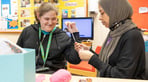
Our amazing team of volunteers help us run over 100 shops across England and Wales. Every donated item that you sort, prepare and sell helps to raise vital funds to support us in our mission to make sure no one, no matter how complex their disabilities, is isolated, left out, or unable to fulfil their potential. Our shops are at the heart of local communities – sharing the work of Sense, and helping to secure support for our life changing work.
What your role will involve
There are a variety of tasks that you can get involved with in the shop, including:
- Welcoming and assisting customers, providing great customer service and a fantastic shopping experience
- Receiving donated goods from members of the public
- Sorting, steaming, tagging and preparing donated goods for sale
- Creating eye catching window and in-shop displays
- Keeping the shop floor well stocked, tidy, clean and organised
- Processing sales and serving on the till
- Promoting Gift Aid and other Sense fundraising initiatives
- Acting as an ambassador for Sense; promoting the shop and Sense in your local community
- Supporting with the recruitment and training of new volunteers
- Following new health and safety measures to ensure the safety of everyone
Will the role suit me? Yes, if you are:
- Motivated and hardworking
- Reliable, flexible and willing to do a variety of shop tasks
- A team player
- Friendly and helpful
- Passionate about customer service and enjoy interacting with people
- Respectful of others and their diversity
- Interested in supporting the work of Sense and want to make a difference to people who have complex disabilities and are deafblind.
What can Sense offer me as a volunteer?
- A full induction and ongoing support and guidance from your Shop Manager to make sure you feel confident in your role
- Support to develop new skills, knowledge and experience, in particular of a retail environment, but also skills such as teamwork, customer service, communication and using your initiative
- A reference for other paid or voluntary work (available on request)
- The opportunity to share your existing skills and experience to benefit others
- The chance to meet new people from a wide range of backgrounds and to join a passionate and committed team
- The opportunity to make an invaluable contribution to Sense by raising vital income and raising the profile of Sense in your local community; changing the lives of those who have complex disabilities and are deafblind
About Sense
For everyone living with complex disabilities. For everyone who is deafblind. Sense is here to offer personalised support to help people communicate and experience the world. We believe that no one, no matter how complex their disabilities, should be isolated, left out, or unable to fulfil their potential. Our experts offer support that’s tailored to the individual needs of each person, whether that’s at our centres, through our holidays and short breaks, or in people’s own homes. In addition to practical support, we also provide information to families, and campaign for the rights of people with complex disabilities to take part in life.
Volunteers add real value to Sense, bringing their passion, enthusiasm and fresh perspectives to the work that we do. We believe that volunteers enable us to bring people together, and provide opportunities for people with complex disabilities to communicate and experience the world.
We include. We collaborate. We find a way. We challenge. We celebrate.
 Registered Charity
More than 1000
Registered Charity
More than 1000
We believe that every disabled person should have the opportunity to connect with others and be included in the world.




Thank you!
Actively Interviewing
This organisation is scheduling interviews as applications come in. They're ready to hire as soon as they find the right person. Don't miss your opportunity, apply now!
Volunteering for Sense
Our amazing team of volunteers help us run over 100 shops across England and Wales. Every donated item that you sort, prepare and sell helps to raise vital funds to support us in our mission to make sure no one, no matter how complex their disabilities, is isolated, left out, or unable to fulfil their potential. Our shops are at the heart of local communities – sharing the work of Sense, and helping to secure support for our life changing work.
What your role will involve
There are a variety of tasks that you can get involved with in the shop, including:
- Welcoming and assisting customers, providing great customer service and a fantastic shopping experience
- Receiving donated goods from members of the public
- Sorting, steaming, tagging and preparing donated goods for sale
- Creating eye catching window and in-shop displays
- Keeping the shop floor well stocked, tidy, clean and organised
- Processing sales and serving on the till
- Promoting Gift Aid and other Sense fundraising initiatives
- Acting as an ambassador for Sense; promoting the shop and Sense in your local community
- Supporting with the recruitment and training of new volunteers
- Following new health and safety measures to ensure the safety of everyone
Will the role suit me? Yes, if you are:
- Motivated and hardworking
- Reliable, flexible and willing to do a variety of shop tasks
- A team player
- Friendly and helpful
- Passionate about customer service and enjoy interacting with people
- Respectful of others and their diversity
- Interested in supporting the work of Sense and want to make a difference to people who have complex disabilities and are deafblind.
What can Sense offer me as a volunteer?
- A full induction and ongoing support and guidance from your Shop Manager to make sure you feel confident in your role
- Support to develop new skills, knowledge and experience, in particular of a retail environment, but also skills such as teamwork, customer service, communication and using your initiative
- A reference for other paid or voluntary work (available on request)
- The opportunity to share your existing skills and experience to benefit others
- The chance to meet new people from a wide range of backgrounds and to join a passionate and committed team
- The opportunity to make an invaluable contribution to Sense by raising vital income and raising the profile of Sense in your local community; changing the lives of those who have complex disabilities and are deafblind
About Sense
For everyone living with complex disabilities. For everyone who is deafblind. Sense is here to offer personalised support to help people communicate and experience the world. We believe that no one, no matter how complex their disabilities, should be isolated, left out, or unable to fulfil their potential. Our experts offer support that’s tailored to the individual needs of each person, whether that’s at our centres, through our holidays and short breaks, or in people’s own homes. In addition to practical support, we also provide information to families, and campaign for the rights of people with complex disabilities to take part in life.
Volunteers add real value to Sense, bringing their passion, enthusiasm and fresh perspectives to the work that we do. We believe that volunteers enable us to bring people together, and provide opportunities for people with complex disabilities to communicate and experience the world.
We include. We collaborate. We find a way. We challenge. We celebrate.
Registered Charity
More than 1000
We believe that every disabled person should have the opportunity to connect with others and be included in the world.
Thank you!
Actively Interviewing
This organisation is scheduling interviews as applications come in. They're ready to hire as soon as they find the right person. Don't miss your opportunity, apply now!
RSPCA Milton Keynes & North Bucks
Do you love ebay? We are looking for volunteers skilled in online selling and photography to help turn donations into funds. You will have fun, contribute to making our eBay business a big success, and enable us to help more animals!
Overview of opportunity
This is an excellent opportunity if you are interested in collectables, researching unusual items, and love photographing objects to look their best! The time you dedicate would ensure that we made the most of the incredible donations to our charity shops, which means more funds can go towards our vital animal welfare work.
About the RSPCA
Founded in 1824 we have been saving animals for almost 200 years and are proud to be the oldest welfare charity around. It has always been our vision to live in a world where all animals are respected and treated with compassion, so our volunteers and employees work tirelessly to ensure that all animals can live free from pain and suffering.
Our Charity Shop in New Bradwell, Milton Keynes
Our shops play an essential role in raising the profile of the RSPCA in our local community and funds for our branch so that we can continue our vital animal welfare work. Our shops sell a mixture of donated items, including clothes, books, bric-a-brac and collectables, and a selection of new items.
Volunteer eBay Coordinator responsibilities
- Researching and listing the items for sale in our dedicated eBay store.
- A picture is worth 1,000 words so ensuring that attractive photographs are taken to boost eBay sales.
- Packaging items appropriately before posting them to the buyer.
- Maintaining accurate records of listed and sold items.
What we are looking for in a volunteer eBay Coordinator:
- Basic knowledge of eBay and online selling platforms
- Good organisational skills and attention to detail
- Ability to take clear photographs and write accurate descriptions
- Basic computer skills, including familiarity with email and online payment systems
- Good communication skills and a friendly, helpful attitude
- Someone who is flexible and can offer an ongoing commitment
What we can offer you as a volunteer eBay Coordinator
- You will be making a massive difference to the welfare of the animals in your area.
- Join a community which will enable you to meet new people and make new friends.
- Learn e-commerce skills
- Develop your organisational skills
- Enhance your CV by adding your volunteering experience and newly acquired skills.
How to Apply:
If you’ve got the drive and compassion to volunteer with the RSPCA and are passionate about improving animal welfare, we’d love to hear from you!
We hope you are interested in volunteering for the Milton Keynes & North Bucks Branch
Join us in making a real difference to the lives of animals in need.
Our voluntary roles are subject to an informal interview and trial period. We will ask you to provide contact details for two referees, and dependant on the position, you may need to sign an agreement and undergo specific training before starting the role.

The client requests no contact from agencies or media sales.
Thank you!
Actively Interviewing
This organisation is scheduling interviews as applications come in. They're ready to hire as soon as they find the right person. Don't miss your opportunity, apply now!
CHIEF OPERATING OFFICER @ REMIX
Build the engine. Shape the systems. Power the movement.
REMIX is a youth charity with energy. We’re bold. We’re positive. We’re community-first. We back young Londoners with confidence, skills, networks, and opportunities to rise — on their terms, in their voice, with their power.
Now we’re looking for a Chief Operating Officer (COO) who can help turn that mission into smooth, powerful, youth‑driven action every single day. Someone who loves structure and vibe. Someone who can build systems that feel human, accessible, and full of life. Someone who wants to help run a movement, not just a charity.
We want a COO who is:
-
Organised, strategic, and full of positive energy
-
A natural problem‑solver who brings calm, clarity, and momentum
-
Passionate about youth empowerment, social mobility, and community impact
-
Excited to build systems that feel modern, simple, and youth‑friendly
-
Able to support the CEO and wider team with leadership, structure, and operational excellence
What you’ll actually do:
-
Oversee REMIX’s day‑to‑day operations with confidence and care
-
Build and refine systems for HR, safeguarding, finance, volunteers, programmes, and governance
-
Support the CEO with planning, decision‑making, and organisational development
-
Ensure REMIX runs smoothly, safely, and in line with charity regulations
-
Lead on policies, processes, and operational best practice
-
Help create a culture that feels youthful, joyful, and community-powered
-
Bring ideas that help REMIX grow sustainably and impactfully
This is the role that keeps the mission moving and the movement rising.
Why this role matters:
Behind every youth movement is someone who makes sure the foundations are strong. Your leadership helps REMIX:
-
Stay safe
-
Stay organised
-
Stay sustainable
-
Stay ready to support young Londoners at scale
You become the:
-
Architect of our systems
-
Steady hand behind the scenes
-
Partner to the CEO
-
Positive force that keeps REMIX thriving
Who this is perfect for:
-
People with experience in operations, management, or organisational leadership
-
Early‑career professionals wanting meaningful leadership experience
-
Anyone who loves structure, clarity, and purpose
-
People who want to help build a movement, not just a charity
If you’re ready to build the engine that powers REMIX — we want you.
Let’s build something powerful together.
REMIX
 Non Charity Employer
6 - 10
Non Charity Employer
6 - 10
To remix young peoples lives across London, boosting their social mobility.

The client requests no contact from agencies or media sales.
Thank you!
Actively Interviewing
This organisation is scheduling interviews as applications come in. They're ready to hire as soon as they find the right person. Don't miss your opportunity, apply now!
Would you like to support people who have served in the Armed Forces? You don’t need a military background, just the ability to listen, some basic I.T skills and good written and spoken English. If so, this could be the role for you.
Our Branch provides lifelong support to anyone who has ever served, in the British Army, Royal Navy and Royal Air Force and their dependants. We also give support to those who has been in the Merchant Navy, Seafarers, Fishermen and their dependants, and British Airways staff past and present. Our main role is seeking welfare benevolent grants on behalf of clients who reside in the 26 counties in the Republic of Ireland. They can arrange anything from household goods, funeral costs, mobility aids or other general needs. Legal fees are not considered. We would advise clients to seek state and local benefits by signposting them to the relevant agencies.
What is a caseworker?
Caseworkers visit clients to work out what type of help they need, this might be funds for special equipment for someone with a disability, adaptions to a property so an older client can remain at home or funds for a rental deposit. Caseworkers also sign-post clients onto specialist local services for advice on benefits, housing, mental health, debt, finding work etc.
Why do we need you?
Volunteer Caseworkers are the lifeblood of SSAFA, supporting a growing number of people in need of financial, practical and emotional support. Clients come from all backgrounds and age groups and may have served in WW2 or in a more recent conflict like Iraq or Afghanistan. Our trained volunteers listen without judgement to assess and provide tailored support to help people navigate life in and beyond military service. We need you to join your local SSAFA team to help us achieve this.
When would you be needed and where would you be based?
The essential part of the role is visiting clients, so you will need access to a vehicle or another way to travel to meet clients at home or in a care home setting. Our volunteers are based at home with a yearly AGM invite.
What does this role involve?
• Contacting clients and arranging to meet them at a mutually convenient time
• Meeting clients and completing a form to assess their circumstances
• Sign-posting clients onto local services providing specialist advice
• Keeping in touch with your branch so they know your availability
• Keeping up to date with training and SSAFA news so that you are best able to support clients
• Being a positive ambassador for SSAFA remembering that anyone you meet could be a potential client, volunteer or fundraiser
• Volunteering within the standards and values of SSAFA including observing our policies such as the
Volunteering policy and data protection policy (these will be covered in your training and local induction.)
What can you gain from this volunteering role?
• Support people in your community with a military background and their dependents
• Use your skills, knowledge and life experience to benefit others
• Support from your local SSAFA branch and the wider SSAFA community
• Experience, training and skills that you can highlight on your CV and in job interviews
• Better physical and mental health – studies show that volunteers live longer and experience lower levels of stress and depression!
What training and support will you receive?
• On-line or face to face instructor led training and e-learning modules, to prepare you for your voluntary role.
• Access to a range additional e-learning courses as well as local opportunities for your personal and professional development.
• Local induction including assigning a person from the team who will be your main point of contact. •
• Range of support from central and regional volunteer operations team.
• Reimbursement of out-of-pocket expenses
What skills or experience do you need?
• Good listening and communication skills including written and spoken English
• Respectful and non-judgemental with clients, their family, other agencies and SSAFA colleagues
• Willingness and ability to learn basic digital skills. Ability to send and receive emails – you will receive your own SSAFA email address which you will be required to use when exercising your role
• Ability to make enquires on behalf of clients by phone, email, letter or by filling in forms
• If required, willingness to use our on-line case management system (this is covered in the caseworker training course)
• Ability to keep within boundaries of the role with regards to friendship or giving advice
• Reliable attitude, contact clients promptly, keep appointments, update the branch regarding your availability
• Access to public transport or a car to travel to appointments with clients
• Friendly and approachable with some experience of coordinating people and admin
• Practice confidentiality and data protection in line with SSAFA policies.
We welcome volunteers of all backgrounds, abilities, races, sexual orientations, socio-economic backgrounds, and of all faiths and none. SSAFA are committed to making reasonable adjustments to support volunteers with disabilities, so they have access to the same opportunities and experiences as volunteers who do not.
Minimum Age: 18
Safer Recruitment: SSAFA undertakes a systematic approach and utmost care at every step of the process of volunteer recruitment, selection, and retention to ensure that those recruited are suitable and appropriate. Measures taken at points along this journey work together to make volunteering at SSAFA a positive and safe experience
References Required: Yes. We will ask for two references, this can be former employers or people that know you well (other than relatives)
Is a criminal record check required? Yes, Garda Vetting, this is provided by SSAFA at no cost to the potential volunteer.
Registered Charity
101 - 500
Our vision A society in which the Armed Forces, veterans and their families can thrive.
The client requests no contact from agencies or media sales.
Thank you!

Actively Interviewing
This organisation is scheduling interviews as applications come in. They're ready to hire as soon as they find the right person. Don't miss your opportunity, apply now!
We have an exciting opportunity for a new Treasurer to join our board.
As Treasurer, you will work alongside our Finance Manager, the finance sub-committee and our trustee board to oversee the financial strategy and risk management processes of our organisation, to ensure its financial viability and legal compliance. To apply, you must have some financial qualifications (or relevant experience) and have some knowledge or experience of charity finances, fundraising, financial consequences and pension schemes.
Working with the Finance Manager, finance sub-committee (including the CEO) and trustee board, the Treasurer will oversee the financial strategy and risk management processes of the organisation, to ensure its financial viability and legal compliance.
We want our board to have a diverse range of experiences and backgrounds and are looking for strategic thinkers with a commitment to good governance and a willingness to work collaboratively and challenge constructively.
We are committed to being an inclusive workplace and we value diversity - we welcome and encourage applications from all walks of life, whatever your background or situation.
This is an exciting opportunity to be able to influence the direction of our charity, making a real difference. You will work alongside passionate and skilled colleagues and use your experience to create positive change for thousands of people in the Winchester district every year.
Citizens Advice Winchester District provides free advice to over 5,000 local people each year, many of whom are in desperate and extremely challenging situations and have nowhere else to turn.
We look forward to hearing from you!
 Registered Charity
11 - 20
Registered Charity
11 - 20
To help people overcome their problems and uphold their rights through advice, support and campaigning, ultimately creating a fairer society for all.
The client requests no contact from agencies or media sales.