




How Volunteering Can Help Combat Loneliness
Did you know that one in five adults lack companionship, or feels left out and isolated? That’s where activities like volunteering can help. By surrounding yourself with people who share your passion and enthusiasm for a cause, you’ll create opportunities to build vital lasting connections. Not totally convinced? Let’s explore the importance of combating loneliness, and some of the ways volunteering can help you achieve this.
The science behind loneliness
According to a study of 135,000 people led by researchers at Imperial College London, one in six adults in England reported feeling lonely “often or always”, while one in five frequently lack companionship. Meanwhile, The World Health Organization has declared loneliness to be a global public health problem, as loneliness and social isolation are known to have a significant impact on both mental and physical health. Estimating that loneliness is linked to around 871,000 deaths internationally every year, risks include strokes, heart disease, diabetes, cognitive decline, depression, anxiety and suicidal thoughts.
The report offers many recommendations, but one key suggestion stood out to CharityJob, as they said “…each person can make a difference through simple, everyday steps—like reaching out to a friend in need, putting away one’s phone to be fully present in conversation, greeting a neighbor, joining a local group, or volunteering.”
Let’s take a closer look at how you can combat loneliness by volunteering
1. Volunteering is good for your health
Volunteering is a scientifically proven mood-booster. For years, we’ve been aware of the physiological as well as psychological effects that helping others has on the body. Charitable acts spark a release of dopamine commonly known as the ‘helper’s high’.
Where loneliness inflicts chronic stress on the body, volunteering actively reduces it. In fact, many people who go out of their way to do good experience considerably less stress and stress-related illnesses.
None of these facts should come as a surprise. Volunteering presents the rare occasion for you to throw yourself into a cause you care deeply about, meet like-minded people and see the tangible results of your actions shaping the world for the better.

2. Young people benefit from volunteering
It would be naïve to think that loneliness only affects an ageing population. According to research by the Marmalade Trust into Gen Z (those born between 1997 and 2012):
– Nearly two-thirds (67%) say they feel lonely at least once a week
– 28% feel lonely several times a day
– 48% say social media makes them feel lonelier
– One in four admits that they find it easier to talk to an AI chatbot than a real person.
The Marmalade Trust research suggests there’s a real risk that social skills are being replaced with digital aids. This is where volunteering fills a much-needed space, as it can do wonders for teens and young people looking to build better social skills, while also adding useful experience to their CVs! In short, combining volunteering with studying can help boost a young person’s confidence and open up new friendship circles. For others later in life – such as new parents and mid-lifers – volunteering can serve as a great catalyst for connection for when you’re in a new environment, when you’re looking for a community, or if you simply want more intimate local friendships.
3. Volunteering is great way to combat loneliness for retirees
As many hard-working befriending charities confirm, social isolation amongst the elderly still remains widespread, and combating loneliness is a real problem. According to the Office for National Statistics, 8.6 million people live alone in the UK, with 49.6% of these aged over 65. That’s why having a sense of community is so important, and volunteering can offer that for many people long into their retirement years.
Volunteering is an opportunity to stimulate both your body and your mind, and it’s been shown to ward off degenerative diseases such as Alzheimer’s and functional decline, both of which are listed under long-term effects of loneliness.
What’s more, volunteering presents the occasion for more inter-generational friendships and gives people a new-found sense of purpose when they’re suddenly faced with limited opportunities to be social. Above all, it creates new social networks for those who wouldn’t otherwise be part of a community.
4. Gain confidence to combat loneliness
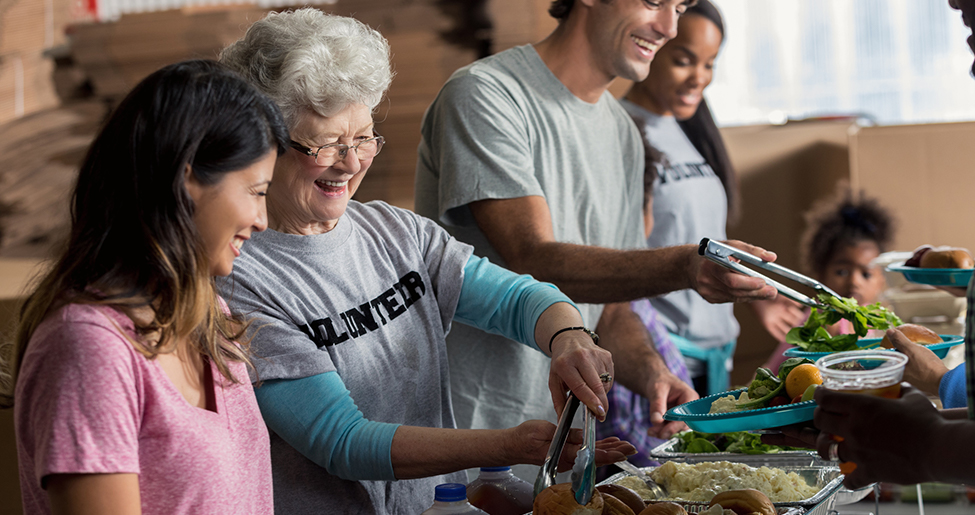
If you’re lonely, it can feel like a real struggle to introduce yourself to new people. But charity volunteering is a great way to ease yourself into social situations where you’ll automatically start interacting with other people. Whether you’re offering to make tea at a community café, sorting out donations in a food bank or doing some volunteer fundraising for a local charity, you’ll inevitably find yourself chatting with the people around you. And bit by bit, your confidence will have the chance to grow.
Find your next charity volunteering role
Volunteering could well be the next wonder drug in combating loneliness, so make sure you choose a cause that you’re passionate about, and that fits with your lifestyle.
At CharityJob, we know the immense value that volunteers offer to charities of all sizes. There are tons of causes that are trailblazing change in the world and could do with your help, so take a look at the huge array of opportunities available. You’re bound to find something you’d enjoy rolling your sleeves up for!
This post was originally published in 2020, then updated in 2023. It has been updated again to ensure relevance and to reflect the current job seeker experience.


